 WawaCoin
Key Summary
In March 2026, the Crypto Clarity Act has finally entered the Senate hearing stage. This bill is a key regulatory proposal that clearly distinguishes whether cryptocurrencies are securities or commodities. After years of jurisdictional disputes between the SEC and CFTC, the U.S. cryptocurrency market is finally getting clear rules.
The White House is currently reviewing new legislative text modified by lawmakers. Given the Trump administration's pro-crypto policy stance, expectations for this bill's passage are growing. Crypto Analysis experts particularly project that institutional investors will accelerate their market entry once this bill passes.
Interestingly, lawmakers are proposing other provisions as a package deal to secure banking sector support. A cryptocurrency regulation bill alone could face resistance from banking lobbies. This legislative trade is being interpreted as a strategic move to increase the bill's chances of passage.
For investors who have been following Crypto News, this bill represents a crucial milestone. Resolving legal uncertainty could positively impact the Bitcoin Analysis March 2026 outlook. Regulatory clarity ultimately increases market maturity and lays the foundation for long-term growth.

Key Contents and Major Changes of the Bill
The most important aspect of the Crypto Clarity Act is that it establishes digital asset classification criteria. Currently, the SEC views most cryptocurrencies as securities, while the CFTC classifies them as commodities. This bill aims to clearly divide jurisdiction between the two agencies to reduce industry confusion.
Specifically, the bill proposes that tokens from sufficiently decentralized networks are classified as commodities, while tokens with centralized issuers are classified as securities. Under these criteria, Bitcoin and Ethereum are likely to be classified as commodities. Meanwhile, projects that raised funds through ICOs would be subject to securities regulation.
Another notable point is the simplification of exchange registration requirements. Many exchanges, including Binance, have struggled to operate in the U.S. partly due to unclear regulations. Once this bill passes, a clear licensing framework will be established, opening the path for legal operations.
Lawmakers are also considering including stablecoin-related provisions to gain banking sector support. This is a package deal that opens the possibility for banks to participate in stablecoin issuance in exchange for supporting the crypto regulation bill. This legislative strategy significantly increases the chances of passage.
Top Exchanges are also closely monitoring the progress of this bill. Regulatory clarity means opportunities for new service launches and business expansion.
| Category | Current | With Crypto Clarity Act |
|---|---|---|
| Bitcoin | SEC/CFTC Jurisdiction Unclear | CFTC Jurisdiction (Commodity) |
| Ethereum | Security Status Debated | CFTC Jurisdiction (Commodity) |
| ICO Tokens | SEC Enforcement Target | SEC Jurisdiction (Security) |
| Exchanges | Unclear Licensing | Clear Registration Framework |
| Stablecoins | Regulatory Gap | Separate Framework |
As shown in the table above, the Crypto Clarity Act contains provisions that significantly reduce current regulatory uncertainty. Particularly if Bitcoin and Ethereum are classified as commodities, they can be traded in a more flexible regulatory environment. CFTC commodity regulation is relatively less strict than SEC securities regulation.
The clarification of exchange registration framework is also a major change. Currently, operating legally in the U.S. requires obtaining different licenses from each of the 50 states, creating a complex structure. If a federal-level unified licensing system is introduced, compliance costs will be significantly reduced, and overseas exchanges will find it easier to enter the U.S. market.
Legislative Progress and Timeline Analysis
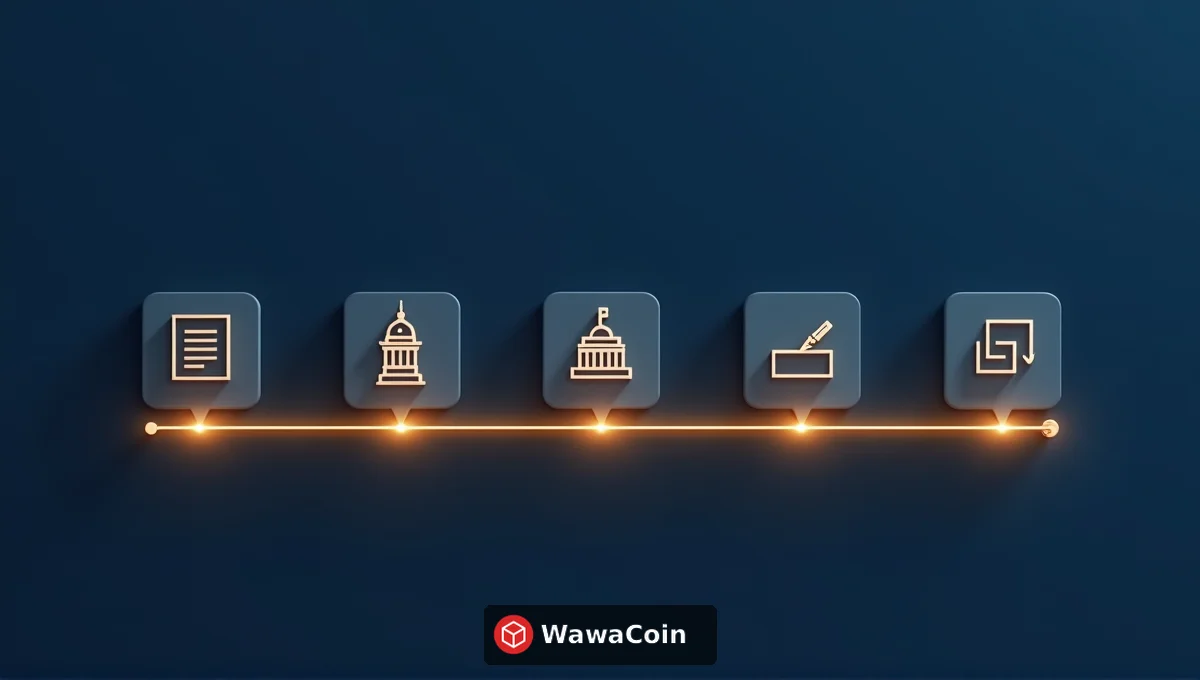
| Stage | Status | Expected Timing |
|---|---|---|
| House Subcommittee | Passed | February 2026 |
| Senate Hearing | Scheduled | Late March 2026 |
| Senate Floor Vote | Pending | April-May 2026 |
| Presidential Signature | Pending | H1 2026 |
| Implementation | Preparing | 180 Days After Signature |
The Crypto Clarity Act has already passed the House subcommittee. A Senate hearing is imminent, expected to be held between late March and early April. The formation of cross-party support among lawmakers is a positive sign.
Considering the Trump administration's pro-crypto stance, if the bill reaches the president's desk, the likelihood of a veto is low. However, 60 votes are needed to overcome a Senate filibuster, which is why package negotiations including banking-related provisions are underway.
Once the bill is signed, a 180-day implementation grace period will be granted. During this time, the SEC and CFTC will develop detailed rules, and exchanges and projects will prepare for the new regulatory framework.
WawaCoin Outlook
Bullish Factors
The Trump administration's pro-crypto stance increases the likelihood of bill passage Cross-party support brightens the outlook for Senate passage Regulatory clarity means fulfilling the key prerequisite for institutional investor entry
Bearish Factors
Opposition from banking lobbies and pro-regulation advocates still exists If the bill is amended in the Senate, coordination with the House could cause delays Some provisions could change unfavorably for the industry
Neutral Factors
Implementation will take at least 6 months, so short-term market impact may be limited Additional uncertainty may arise during SEC and CFTC detailed rulemaking U.S. regulatory trends will also influence other countries' policies
Overall, the Crypto Clarity Act has the potential to be a game changer for the U.S. cryptocurrency market. Regulatory uncertainty has been the biggest reason institutional investors haven't fully entered the market. If this bill passes, the cryptocurrency allocation ratios of pension funds, hedge funds, and asset managers are expected to structurally increase.
However, there are still hurdles to overcome before passage. The negotiation process in the Senate, coordination with the banking sector, and potential modifications to detailed provisions are not insignificant variables. Investors would be wise to continuously monitor bill progress while refraining from excessive bets until passage is confirmed.
Investor Checklist
We've compiled key items that investors should check as the Crypto Clarity Act progresses. Regulatory bills can be amended multiple times before passage, so it's important to continuously update with the latest information. Particularly, Senate hearing schedules and vote projections can directly impact short-term market volatility. Use the checklist below to manage regulatory risk.
Set Up News Alerts
Set up news alerts for keywords like Crypto Clarity Act, Senate hearing, and cryptocurrency regulation. You can respond immediately to changes in bill progress.
Portfolio Diversification
Diversify your portfolio to prepare for volatility depending on whether the bill passes. Appropriately adjust your allocation to regulation-sensitive altcoins.
Monitor Exchange Trends
Watch for U.S. market strategy announcements from major exchanges like Binance. Business expansion moves may emerge in anticipation of regulatory clarity.
Utilize Grace Period
If the bill passes, there's a 180-day implementation grace period. You'll have time to understand detailed rules and adjust your investment strategy during this period.
Frequently Asked Questions
What exactly is the Crypto Clarity Act?
The Crypto Clarity Act is a regulatory bill that clearly defines the legal status of cryptocurrencies in the United States. The core is establishing classification criteria for which cryptocurrencies are securities (SEC jurisdiction) and which are commodities (CFTC jurisdiction). The purpose is to organize the previously unclear regulatory environment and create a framework for exchanges and projects to operate legally.
How will the bill's passage affect Bitcoin's price?
Regulatory clarity is generally positive for the market. Resolving regulatory uncertainty is a key prerequisite for institutional investors to enter the market. If the bill passes, institutional capital inflows are likely to increase in the medium to long term, acting as a price appreciation factor. However, short-term volatility may occur depending on the bill's detailed contents.
How will this affect Korean investors?
The United States is a core country in the global cryptocurrency market. U.S. regulatory direction also influences other countries' policies. If the Crypto Clarity Act passes, it will contribute to forming global regulatory standards and may indirectly affect Korea's regulatory environment. Additionally, increased U.S. market accessibility could lead to increased global liquidity.
When will the bill finally pass?
A Senate hearing is currently scheduled for late March to early April. If proceedings go smoothly, the Senate floor vote could be in April-May, and presidential signature could occur within the first half of the year. However, depending on congressional schedules and negotiation processes, delays are possible, so it's difficult to predict a definitive timing.
Where can I check the bill's progress?
You can check the bill's progress on the official U.S. Congress website (Congress.gov). Major cryptocurrency news outlets like CoinDesk and The Block also cover bill-related news in real-time. WawaCoin will also provide updates whenever there are significant developments.
Conclusion
The Crypto Clarity Act's Senate hearing progress represents a decisive turning point in U.S. cryptocurrency regulation history. The jurisdictional disputes between the SEC and CFTC, unclear classification criteria, and different state-by-state regulatory frameworks have been a major source of uncertainty for both the crypto industry and investors. This bill is a historic attempt to organize this confusion and establish clear rules.
The fact that the White House is reviewing new legislative text and lawmakers are pursuing package deals to secure banking sector support shows political will for the bill's passage. Combined with the Trump administration's pro-crypto stance, the chances of passage within this congressional session appear higher than ever.
Of course, there are still hurdles to overcome. Variables exist including Senate amendments, banking lobby opposition, and reconciling differences over detailed provisions. Investors should not take the bill's passage for granted, but rather closely monitor progress while preparing response strategies.
Regulatory clarity is not just a short-term positive, but a necessary condition for the long-term maturation of the cryptocurrency market. The U.S. role is decisive in genuine institutional investor market entry, legitimate launch of innovative services, and formation of global regulatory standards. The direction of the Crypto Clarity Act will be an important variable determining the direction of the cryptocurrency market for years to come.