 WawaCoin
Key Summary
Altcoin season refers to a period in the cryptocurrency market when altcoins show stronger price appreciation than Bitcoin. It's commonly called Altcoin Season or simply Alt Season.
During this period, major altcoins like Ethereum, Solana, and Cardano to smaller market cap coins generally show bullish momentum. This phenomenon occurs as investors take profits from Bitcoin and rotate funds into altcoins.
Understanding the conditions and signals for altcoin season is essential for grasping crypto market cycles. When Bitcoin consolidates or corrects after a significant rally, investors tend to look for higher returns in altcoins.
This guide covers the precise definition of altcoin season, key indicators, historical case analysis, and practical investment strategies. Reading this alongside the Bitcoin Dominance Guide will help you better understand market trends.

Definition and Mechanics of Altcoin Season
What is Altcoin Season?
Altcoin season isn't simply about altcoin prices rising—it's when altcoins show relatively stronger gains compared to Bitcoin. It's a period where altcoins might gain 30-50% while Bitcoin only rises 10%.
The fundamental reason for this phenomenon is capital rotation. After Bitcoin rallies significantly, profits are taken and the capital flows into altcoins seeking higher returns. This fund rotation accelerates especially when Bitcoin consolidates near previous highs.
The official definition of altcoin season comes from Blockchain Center's Altseason Index. When 75% or more of the top 50 altcoins outperform Bitcoin over the past 90 days, it's officially classified as altseason.
Historically, altcoin seasons have concentrated in the latter parts of bull markets. Classic altseasons occurred in late 2017-early 2018 and early and late 2021, when numerous altcoins gained 10x or more.
| Category | Bitcoin Season | Altcoin Season |
|---|---|---|
| Dominance | Above 60% | Below 55% |
| Altseason Index | Below 25 | Above 75 |
| Capital Flow | Alts → BTC | BTC → Alts |
| Volatility | Relatively low | Very high |
| Duration | 3-6 months | 2-4 months |
| Strategy | Increase BTC weight | Increase alt weight |
Market Cycles and Altseason Relationship
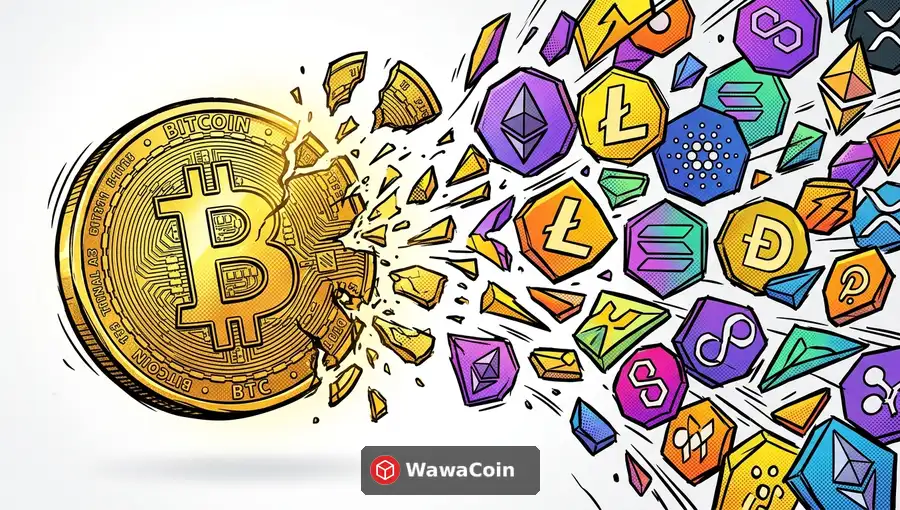
The cryptocurrency market follows consistent cycles. Bitcoin rises first, then Ethereum follows, and finally smaller altcoins surge. Understanding this sequence greatly helps with investment timing.
In the early stages of a bull market, Bitcoin leads. Institutional investors and large capital enter the safest asset—Bitcoin—first. During this period, Bitcoin dominance rises while altcoins underperform relatively.
As the bull market matures into mid-to-late stages, Bitcoin's momentum slows and capital rotates into altcoins. As explained in the Ethereum Complete Guide, Ethereum typically reacts first, followed by other altcoins.
Conditions That Trigger Altseason
Several conditions must be met for altcoin season to begin. First, reduced Bitcoin volatility. When Bitcoin swings wildly, investors avoid the risk of altcoin investments.
Second, sufficient liquidity must enter the market. Increased stablecoin issuance, institutional fund inflows, and retail investor participation are used as liquidity indicators. USDT and USDC market cap increases are often referenced as leading indicators for altseason.
Third, positive market sentiment is needed. As covered in the Fear Greed Index Guide, interest in altcoins tends to explode during greed zones (60-75).
Key Signal Indicators for Altseason
To accurately capture altcoin season, you need to analyze multiple indicators comprehensively. Relying on a single indicator can lead you to fall for false signals.
The most important indicator is Bitcoin dominance. It's the ratio of Bitcoin's market cap to total crypto market cap—falling below 55% is interpreted as an altseason entry signal. In May 2021, dominance dropped to 40%, marking a historic altseason.
Altseason Index is provided by Blockchain Center. Values range from 0-100, with above 75 classified as altseason and below 25 as Bitcoin season. Above 90 indicates overheating—caution is warranted.
ETH/BTC ratio is also a key indicator. When Ethereum shows strength against Bitcoin, other altcoins often follow. When this ratio turns into an uptrend, it can be seen as an imminent altseason signal.
Volume analysis is also important. When altcoin exchange volume increases faster than Bitcoin volume, it means capital is flowing into altcoins. Pay particular attention to altcoin volume trends on major exchanges like Binance and Bybit.
| Indicator | Bitcoin Season | Neutral | Altcoin Season |
|---|---|---|---|
| BTC Dominance | Above 60% | 55-60% | Below 55% |
| Altseason Index | 0-25 | 25-75 | 75-100 |
| ETH/BTC | Downtrend | Sideways | Uptrend |
| Alt Volume Share | Below 30% | 30-50% | Above 50% |
Historical Altcoin Season Case Studies
History repeats itself. Analyzing past altcoin seasons provides useful insights for predicting the next one. Let's examine the notable altseasons of 2017 and 2020-2021.
Late 2017-early 2018 was an altseason that came with the ICO frenzy. While Bitcoin corrected from $20,000, Ethereum soared to $1,400 and XRP exceeded $3. Hundreds of altcoins gained 10-100x during this period.
Early 2021 (January-May) saw DeFi and NFT booms driving the altseason. As covered in the Solana Complete Guide, Solana rose 25x from $2 to $50 during this period. MATIC, LUNA, and similar coins also saw dozens of times gains.
Late 2021 (October-November) saw a second altseason driven by metaverse and GameFi themes. Metaverse coins like SAND, MANA, and AXS surged, and Bitcoin dominance dropped to the 40% range.
| Altseason | Period | Min BTC Dominance | Top Gainers | Avg Returns |
|---|---|---|---|---|
| 2017-2018 | Dec-Jan | 32% | ETH, XRP, ADA | 10-50x |
| Early 2021 | Jan-May | 40% | SOL, MATIC, LUNA | 5-30x |
| Late 2021 | Oct-Nov | 40% | SAND, MANA, AXS | 3-10x |
| 2024 | Mar-Apr | 52% | SOL, AVAX, NEAR | 2-5x |
Investment Strategies for Altseason
Portfolio Rebalancing Strategy
When altseason approaches, you need to adjust your portfolio composition. Reduce Bitcoin weight and increase altcoin weight while maintaining risk management principles.
Generally, during Bitcoin season maintain BTC at 60-70% and altcoins at 30-40%. When altseason signals appear, adjust to BTC 30-40% and altcoins 60-70%.
Major Altcoins (40-50%)
Ethereum (ETH): Core altseason asset Solana (SOL): High-performance L1 leader Cardano (ADA): Stable major XRP: Payment-focused coin
Mid-cap Altcoins (20-30%)
Polygon (MATIC): Leading L2 solution Avalanche (AVAX): Subnet ecosystem Chainlink (LINK): Oracle leader Uniswap (UNI): DeFi blue chip
Small-cap/Theme Coins (10-20%)
New L1/L2 projects Memecoins (high risk) AI/RWA theme coins GameFi/Metaverse tokens
Entry Timing and DCA Strategy
Going all-in during altseason is risky. Use dollar-cost averaging to spread your risk. Enter in stages: first entry when Altseason Index exceeds 50, second at 65, third at 75.
Refer to the RSI Indicator Guide and MACD Indicator Guide to check individual altcoin overbought/oversold conditions. Not all coins rise simultaneously during altseason.
Entry Signals (Buy)
BTC dominance breaks below 55% Altseason Index breaks above 75 ETH/BTC trend reversal upward Altcoin volume surge
Caution Signals (Wait)
Altseason Index above 90 Fear & Greed Index above 90 Social media overheating Daily RSI above 80
Exit Signals (Sell)
BTC dominance starts rebounding Altseason Index dropping sharply ETH/BTC turns downward Volume decreasing + price rising
Risk Management and Stop-Loss Strategy
Altcoin season comes with high returns and high risks. You must account for 3-5x volatility compared to Bitcoin. Always set stop-loss levels and keep altcoin exposure to no more than 20-30% of total assets.
When altseason ends, altcoins often crash 80-95%. Set your profit-taking points in advance and don't get greedy—that's the key to long-term survival.

WawaCoin Outlook
Bullish Factors
Post-halving liquidity increase Ethereum ETF approval expectations Institutional altcoin investment expansion L2/Modular blockchain growth
Bearish Factors
Global recession concerns Ongoing regulatory uncertainty Cascading liquidations if BTC drops Slowing new capital inflows
Watch Points (Neutral)
Bitcoin dominance 55% level Stablecoin market cap trends Fed interest rate policy direction Geopolitical risk changes
2026 is the year when Bitcoin halving effects fully materialize. Historically, altcoin seasons have arrived 12-18 months after halvings. Based on the April 2024 halving, late 2025 to mid-2026 is the likely window.
Bitcoin dominance is currently consolidating in the mid-50% range. A clear break below 55% can be viewed as Phase 1 altseason entry. If Ethereum ETF approval materializes, capital inflows will likely accelerate.
Themes to watch include AI blockchain, RWA (real-world asset tokenization), and modular blockchains. Like DeFi/NFT in 2021, specific narratives are likely to drive the altseason. Research relevant projects ahead of time.
Investor Checklist
Regularly check the following checklist to prepare for altcoin season. Investing based on principles rather than emotions is the key to success.
Check Bitcoin Dominance
Monitor the BTC.D chart on TradingView daily. Whether it breaks below 55% is the key altseason entry signal. Analyzing weekly trends together improves accuracy.
Monitor Altseason Index
Check Blockchain Center's Altseason Index 2-3 times per week. Above 75 means entry, above 90 means overheating caution.
Track ETH/BTC Ratio
Check if Ethereum is strong against Bitcoin. When an uptrend reversal is confirmed, other altcoins are likely to follow.
Adjust Portfolio Weights
Adjust BTC/alt weights based on altseason signals. Don't go all-in at once—gradually rebalance for safety.
Set Stop-Loss Levels
Pre-set -20% or -30% stop-loss levels for each altcoin. This prevents emotional reactions and protects capital.
Establish Profit-Taking Plan
Partially sell when target returns are reached. Set rules like selling 30% at 50% profit, 50% at 100% profit.
Frequently Asked Questions
When does altcoin season start?
Altcoin season starts when Bitcoin dominance falls below 55%, Altseason Index breaks above 75, and ETH/BTC ratio turns upward. It typically begins after Bitcoin reaches new all-time highs and consolidates for 2-4 weeks. It's more accurate to judge by combining multiple signals rather than relying on a single indicator.
How long does altcoin season last?
Historically, altcoin season has lasted an average of 2-4 months. Late 2017-early 2018 was about 2 months, early 2021 about 4 months, and late 2021 about 2 months. However, duration can vary depending on market conditions, so always watch for exit signals.
Which altcoins should I invest in?
During altseason, major altcoins like Ethereum and Solana are the safest choices. Volatility is lower but you can expect 2-5x returns. For higher returns, consider mid-cap coins ranked 50-200, but always verify project fundamentals. Memecoins can 10x or more but also carry -90% loss risk.
What happens when altseason ends?
After altseason ends, most altcoins crash. In 2018, many altcoins dropped -95% or more, and -80-90% crashes were common in 2022. Therefore, you must have a profit-taking plan during altseason and exit without greed when exit signals appear.
Can I invest only in altcoins without Bitcoin?
Not recommended. Altcoins have 3-5x higher volatility than Bitcoin and drop more severely in bear markets. Bitcoin provides portfolio stability, so maintaining at least 30-40% in BTC is advisable. A 100% altcoin portfolio can yield high returns in bull markets but recovery in bear markets is very difficult.
Where can I check the Altseason Index?
You can check it for free on the Blockchain Center website (blockchaincenter.net). It displays values from 0-100 by comparing 90-day returns of the top 50 altcoins against Bitcoin. Above 75 is altseason, below 25 is Bitcoin season. It's accessible on mobile too, so bookmark it.
Conclusion
Altcoin season is the opportunity to achieve the highest returns in cryptocurrency investing. But it's also the most dangerous period. Let's summarize the key points for successful altseason investing.
First, read the signals accurately. Bitcoin dominance below 55%, Altseason Index above 75, and ETH/BTC uptrend reversal are the three key indicators. Don't rely on just one—judge comprehensively to avoid false signals.
Second, follow DCA and partial selling principles. Going all-in at the start of altseason or holding until the end is risky. Enter in stages and partially sell when target returns are reached.
Third, risk management is key to survival. Altcoins can 10x in bull markets but also crash -95% in bear markets. Set stop-loss levels in advance and never invest money you can't afford to lose.
Fourth, understand market cycles. Remember the sequence: Bitcoin leads → Ethereum follows → Altcoin explosion. Knowing this pattern helps you time altseason entries more accurately.
Fifth, diversify your information sources. Relying only on specific influencers or community opinions makes you vulnerable to FOMO. Develop the habit of directly checking on-chain data, exchange volumes, and technical indicators.
2026 is the year when Bitcoin halving effects fully materialize, with high probability of altcoin season. Only investors who study and prepare in advance can seize the opportunity. We hope this guide helps you invest successfully.
Finally, investing is your own responsibility. This article is for informational purposes only and is not investment advice. Always make investment decisions based on your own judgment and responsibility.