 WawaCoin
Key Summary
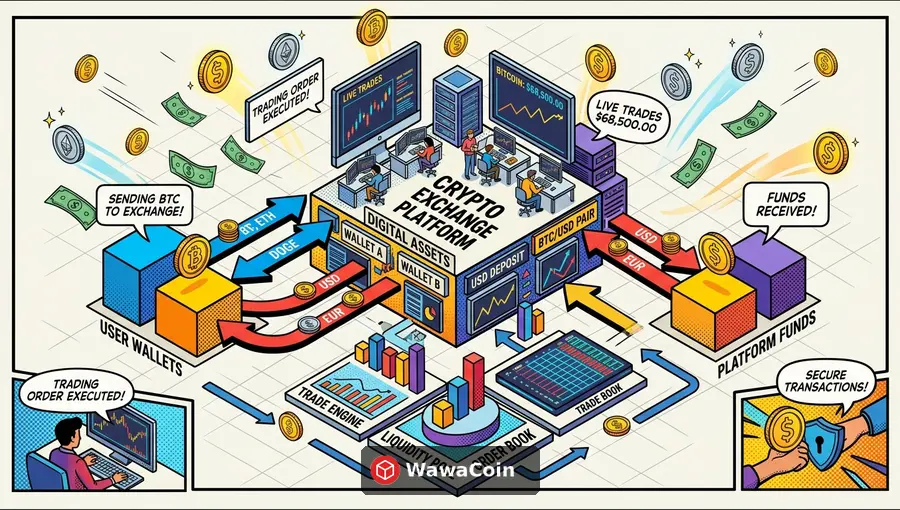
Exchange Flow is an on-chain indicator that tracks the movement of cryptocurrencies into and out of exchange wallets. Because it directly shows actual behavior of market participants, it plays a crucial role in predicting price movements.
Inflow to exchanges generally indicates selling intent, while Outflow indicates long-term holding intent. The reason investors send coins to exchanges is mostly to sell, while withdrawing from exchanges to personal wallets means they don't intend to sell.
During the 2024-2025 bull market, exchange holdings fell to historic lows. This showed investors' strong intention to HODL Bitcoin without selling, and became an important signal for subsequent price increases.
This guide covers everything from reading exchange flow data to interpreting real trading signals and combining strategies with other on-chain indicators. Using it with the MVRV Ratio Guide or SOPR Indicator Guide enables more accurate analysis.
Core Concepts of Exchange Flow
What is Exchange Inflow?
Exchange Inflow refers to cryptocurrency moving from personal wallets to exchange wallets. The main reason investors send coins to exchanges is to prepare for selling.
When inflow surges, there's a higher possibility of selling volume flooding the market. Especially when large inflows occur right after Bitcoin price spikes, profit-taking selling may occur, so be cautious. The April 2021 and November 2022 crashes were preceded by surging exchange inflow patterns.
However, not all inflows mean selling. It could be inter-exchange fund transfers or deposits for staking. Therefore, you need to look at aggregated data from all exchanges, not just single exchanges, and analyze wallet characteristics (individual vs institutional) together.
When viewing inflow data, looking at rate of change compared to moving average is more useful than absolute volume. If inflow exceeds 200% of normal levels, it can be considered a meaningful signal.
| Inflow Scale | Daily Threshold | Market Meaning | Alert Level |
|---|---|---|---|
| Small | Under 10K BTC | Normal trading | Low |
| Medium | 10-20K BTC | Some profit taking | Moderate |
| Large | 20-30K BTC | Increased selling pressure | High |
| Extreme | 30K+ BTC | Possible panic selling | Very High |
What is Exchange Outflow?
Exchange Outflow refers to cryptocurrency leaving exchange wallets to personal wallets. Generally, when investors withdraw coins from exchanges, it means they have no intention to sell.
Large outflows suggest long-term holding conversion by institutions or whales. Moving to cold wallets reduces hacking risk and shows the intention not to sell easily. During and after the 2024 Bitcoin halving, sustained large outflows led to price increases due to supply reduction.
When analyzing outflow data, you need to distinguish technical movements like exchange cold wallet reorganization. Professional platforms like CryptoQuant and Glassnode provide data with this noise removed.
Importance of Netflow
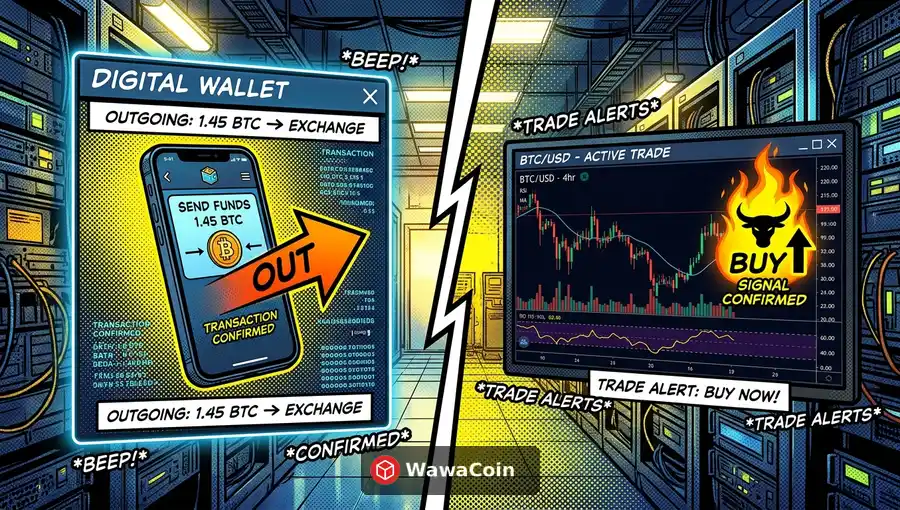
Netflow is inflow minus outflow. Positive means net inflow (selling pressure), negative means net outflow (accumulation signal). Netflow shows market direction more clearly than individual inflow/outflow.
When 7-day moving average Netflow remains negative, it means continuous accumulation is occurring. As explained in the Bitcoin Complete Guide, when supply decrease meets demand increase, price upward pressure intensifies.
Conversely, when Netflow turns positive and grows larger, you can suspect entering a selling cycle. Especially Netflow turning positive at price peaks can be a precursor to decline.
Historical Exchange Flow Pattern Analysis
Exchange flow data started being seriously tracked from 2017. Analyzing data from the past 9 years reveals clear cycle patterns.
2017 Bull Market: This was when exchange holdings peaked. At that time, personal wallet usage wasn't active, and most coins were stored on exchanges. Holdings maintained over 3 million BTC.
2020-2021 Bull Market: As institutional investment began in earnest, exchange outflows surged. Corporate Bitcoin accumulation by MicroStrategy, Tesla and others started, and exchange holdings decreased to 2.6 million BTC.
2022 Bear Market: As exchange risks like the FTX collapse were highlighted, the Not your keys, not your coins awareness spread. Ironically, outflows accelerated during the bear market, dropping holdings to 2.4 million BTC.
2024-2025 Bull Market: Bitcoin spot ETF approval and halving effects led to record exchange outflows. Holdings recorded a historic low of 2.2 million BTC, which became a powerful foundation for price increases.
| Period | Exchange Holdings | Key Event | Subsequent Price Move |
|---|---|---|---|
| Dec 2017 | 3.1M BTC | First mass adoption | -80% (2018) |
| Mar 2020 | 2.95M BTC | COVID crash | +700% (1 year) |
| Apr 2021 | 2.6M BTC | Institutional accumulation | -50% (6 months) |
| Nov 2022 | 2.45M BTC | FTX collapse | +300% (2 years) |
| Nov 2024 | 2.2M BTC | ETF + Halving | +150% (1 year) |
| Apr 2026 | 2.3M BTC | Current | Ongoing |

Practical Exchange Flow Analysis Strategies
To use exchange flow data in actual trading, you need to know a few core principles. Don't just look at inflow/outflow numbers, but interpret them with context.
First, look at the trend. 7-day and 30-day moving averages are more important than one or two days of data. Temporary spikes may be noise, but trend changes are meaningful signals.
Second, look at price position together. Large inflows at highs are bearish signals, large outflows at lows are likely bottom signals. Using the Fear Greed Index Guide together helps more accurately gauge market sentiment.
Third, recognize exchange differences. Coinbase outflows often mean institutional accumulation, while Binance inflows often mean retail selling. Interpretation based on exchange characteristics is necessary.
| Analysis Tool | Free/Paid | Features | Recommended Use |
|---|---|---|---|
| CryptoQuant | Paid (Some Free) | Most detailed data | Professional trading |
| Glassnode | Paid (Some Free) | Excellent visualization | Report writing |
| IntoTheBlock | Paid (Some Free) | AI analysis | Beginner friendly |
| Coinglass | Free | Real-time data | Quick checks |
| Santiment | Paid | Social data combined | Comprehensive analysis |
Combination Strategies with Other On-Chain Indicators
MVRV + Exchange Flow Combination
Combining MVRV Ratio with exchange flow helps you time buy/sell decisions more accurately. When MVRV is below 1 and exchange outflows continue, it's an optimal buying zone.
Conversely, when MVRV is above 3 and exchange inflows surge, it's an overheating signal. When both indicators warn simultaneously, consider reducing positions. April 2021 and December 2024 showed this pattern.
MVRV Below 1 + Large Outflow
Historic buying opportunity Long-term investors actively accumulating Average +100% within 6 months Failure probability under 15%
MVRV 2-3 + Neutral Netflow
Uptrend continuation zone Trading opportunity High volatility zone Consider starting partial sells
MVRV Above 3 + Large Inflow
Overheating warning signal Increased profit-taking selling High probability of -30% within 6 months Risk management priority
SOPR + Exchange Flow Combination
Combining SOPR (Spent Output Profit Ratio) with exchange flow helps understand both the profit/loss status and behavior of market participants. As explained in the SOPR Indicator Guide, SOPR below 1 means there's more selling at a loss.
When SOPR is below 1 and exchange inflows increase, it's a panic selling zone. Contrarian buying at these times can be a good opportunity. March 2020 and June 2022 are prime examples.
When SOPR is above 1.05 and exchange inflows surge, it's a zone where profit-taking selling floods in. Looking at the Bitcoin Dominance Guide together helps identify whether funds are flowing into altcoins.
SOPR Below 0.95 + Large Inflow
Panic selling climax Contrarian buying opportunity High short-term rebound probability Dollar-cost averaging recommended
SOPR Near 1.0 + Balanced Flow
Break-even test Uncertain direction Wait or small positions Await clear signals
SOPR Above 1.05 + Large Inflow
Profit-taking rush Upside exhaustion signal Limited further upside potential Consider reducing positions
Exchange-Specific Flow Characteristics
Each exchange has different user characteristics, so flow data meanings differ too. Coinbase has a high proportion of US institutional investors, so outflows are interpreted as institutional accumulation.
Binance has many global retail investors, so inflows can be seen as retail selling pressure. Korean exchanges have Kimchi Premium arbitrage volume mixed in, so be cautious with standalone interpretation.
WawaCoin Outlook
Bullish Factors
Exchange holdings maintain near historic lows Continuous institutional outflows (ETF custody etc.) Increased retail self-custody Enhanced scarcity due to supply reduction
Bearish Factors
Possible liquidation due to macro uncertainty Need to monitor large whale wallet exchange movements Possible increased exchange inflows if regulations tighten Miner selling pressure due to revenue squeeze
Monitoring Points
Weekly Netflow trend (whether negative maintained) Coinbase premium and outflow correlation Stablecoin exchange inflow volume Long-term holder (LTH) wallet movements
Looking at current market conditions, institutional investors' long-term holding conviction remains strong. Bitcoin spot ETF funds continue flowing in, and most of this volume moves to custodian cold wallets, showing up as exchange outflows.
Retail investors have also heightened self-custody awareness since the FTX incident. Hardware wallet sales are at all-time highs, which is a structural factor for exchange outflows.
However, be cautious of macroeconomic risks. During rate hikes or increased recession concerns, risk asset liquidation occurs, which can appear as surging exchange inflows. It's good to set response strategies while monitoring weekly Netflow trends.
Investor Checklist
Essential items to check before applying exchange flow data in practice based on this guide.
Select Data Sources
Choose reliable data providers like CryptoQuant, Glassnode. Free data may have delays, so refer to premium data for important decisions.
Distinguish Trends vs One-offs
7-day and 30-day moving average trends are more important than one-two day spikes. One-off spikes may be internal exchange movements, treat as noise.
Check Price Position
Exchange flow signal meanings change based on price position. Surging inflows at highs are warning signals, increasing outflows at lows are accumulation signals.
Multiple Indicator Analysis
Analyze with MVRV, SOPR, Fear & Greed Index together, not just Exchange Flow alone. Reliability increases when multiple indicators point the same direction.
Understand Exchange Characteristics
Coinbase outflows likely mean institutional accumulation, Binance inflows likely mean retail selling. Understand exchange characteristics when interpreting data.
Prioritize Risk Management
No signal is 100% accurate. Set stop-loss lines and manage position sizes. On-chain data provides probabilistic edge, not certainty.
Frequently Asked Questions
Where can I view exchange flow data?
You can check on CryptoQuant, Glassnode, IntoTheBlock, Coinglass and others. Free versions provide basic data, but detailed analysis requires paid subscriptions. For English services, Glassnode has the best accessibility.
Does high exchange inflow always mean price drop?
No. High exchange inflows don't always immediately lead to selling. You need to see if actual selling pressure occurs after inflow, along with trading volume. Also, it could be inter-exchange transfers or staking deposits, so context matters.
Which exchange data should I watch?
Use aggregated data from all exchanges as baseline, but watch Coinbase (institutions) and Binance (retail) separately. Korean exchanges have Kimchi Premium arbitrage volume mixed in, so be cautious with standalone interpretation. Aggregated data from top 10-20 exchanges is most reliable.
How quickly is flow data reflected?
Due to blockchain characteristics, on-chain data reflects nearly real-time. However, aggregation cycles vary by analysis platform, free versions may have 1-24 hour delays. Refer to paid real-time data during urgent market situations.
Can altcoins besides Bitcoin be analyzed for flow?
Ethereum, major ERC-20 tokens, Solana and other large altcoins can also be analyzed for flow. However, data isn't as rich as Bitcoin, and interpretation is more complex due to smart contract characteristics. Recommend mastering Bitcoin flow first then expanding to altcoins.
Should long-term investors also watch flow data?
Yes, it's useful for long-term investors too. Looking at monthly and quarterly trends helps identify market cycle position. If exchange holdings are near historic lows, supply side is favorable; if sharply increasing, you can suspect late cycle.
Conclusion
Exchange Flow is the most intuitive on-chain indicator showing market participants' actual behavior. The biggest advantage is that you can gauge market sentiment without complex formulas, just by looking at whether coins are entering or leaving exchanges.
The core is simple. Exchange inflow indicates selling intent, outflow indicates holding intent. Based on this basic principle, identify trends and interpret along with price position.
Currently in 2026, exchange holdings maintain around 2.3 million BTC, near historic lows. This is evidence that investors' intention to hold Bitcoin long-term remains strong. When supply is limited and demand is maintained, price support strengthens.
However, don't try to predict everything with exchange flow alone. Reliability increases when combined with other on-chain indicators like MVRV and SOPR. Always consider external factors like macroeconomic conditions and regulatory issues.
If starting is difficult, first start monitoring weekly Netflow trends. If negative continues, it's an accumulation zone; if it turns positive, it's a caution zone. This simple rule alone will help you develop eyes for reading market cycles.
On-chain data provides probabilistic edge, not 100% accurate predictions. However, data-based analysis rather than emotional judgment improves investment performance long-term. We hope you become a more mature investor through exchange flow analysis.